Ojukheon, Gangneung: The Historic House Behind Korea’s Banknotes
Two faces familiar from Korean banknotes have a shared address in Gangneung. At Ojukheon, you can see the historic house associated with the artist Shin Saimdang and her son, the scholar Yulgok Yi I, then follow their story into galleries of art and local history. The pleasure here is in connecting a real courtyard and its rooms with people often encountered only as portraits.
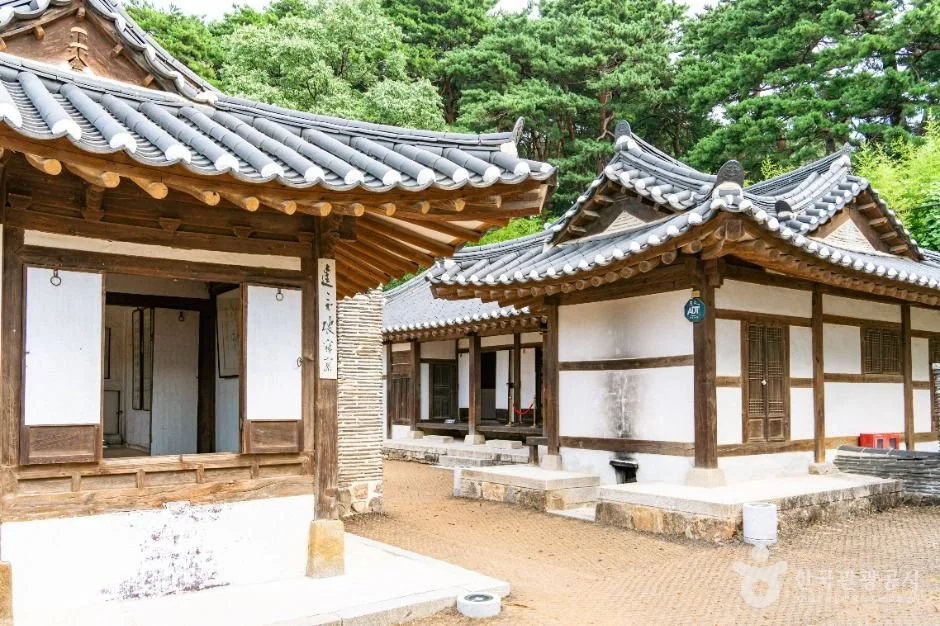
Start at the house, not the museum cases
Ojukheon is protected as a Korean Treasure. Its best-known room, Mongnyongsil, is identified as the room where Yi I was born. The name Ojukheon comes from the dark bamboo, ojuk, planted around the house. Look at the low wooden floors, white walls and rooflines in the courtyard before moving on: these make the historical setting more tangible than a name on a label.
Shin Saimdang and Yi I both appear in the story of Korean currency. Their portraits feature on the ₩50,000 and ₩5,000 notes respectively; Ojukheon and its black bamboo are also associated with the ₩5,000 note. An entrance artwork uses the two banknotes as a visual introduction. It is a handy orientation point, but the actual house is the reason to go inside.
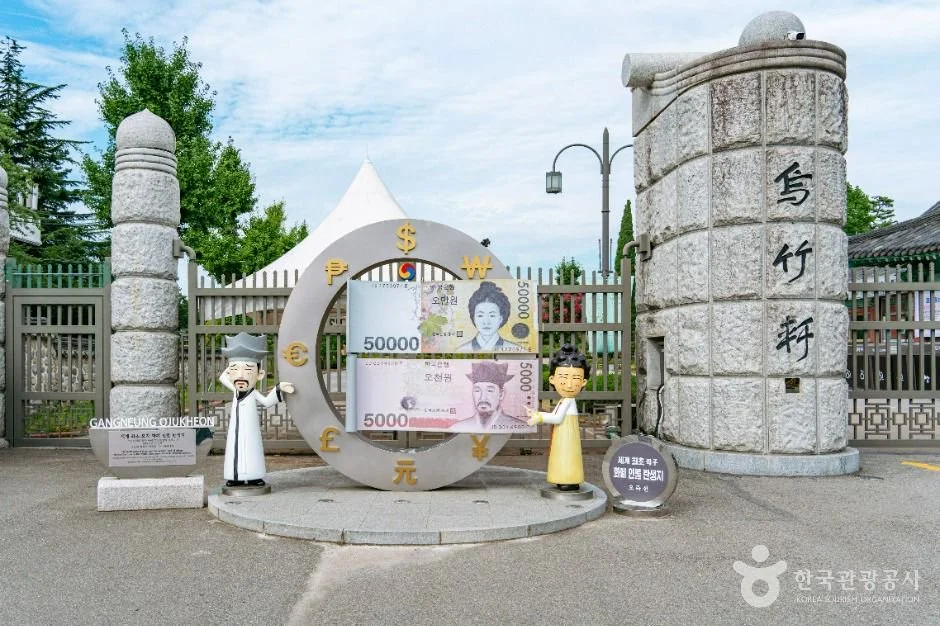
Then let the galleries add context
The same grounds include Munseongsa shrine, Eojegak, the Yulgok Memorial Hall and Gangneung Municipal Museum. The memorial hall presents artistic work associated with Saimdang, Yi I and their family. The municipal museum broadens the visit beyond one household, with Yeongdong-region objects, ceramics and local historical material.
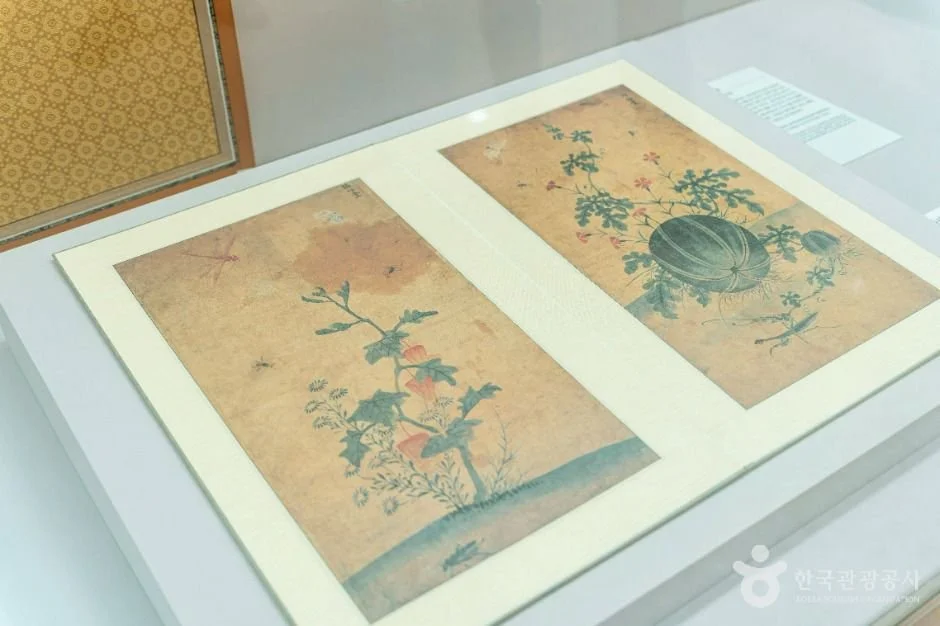
A photographed album of plant and insect paintings is a good reminder to look for small details as well as famous names. Treat the photo as an archive view: individual works and gallery arrangements may have changed. The grounds also hold the protected Yulgok plum tree, traditionally linked to Saimdang and Yi I, though its appearance changes by season.
Plan the visit
- Hours: 09:00–18:00, with ticket sales ending at 17:00.
- Closing days: The site is listed as open year-round. On 1 January, Seollal and Chuseok day, only Ojukheon opens; indoor exhibition rooms close.
- Admission: Individual tickets are ₩3,000 for adults, ₩2,000 for teenagers and ₩1,000 for children. Check current concessions before paying.
- Address: 24 Yulgok-ro 3139beon-gil, Gangneung (강릉시 율곡로3139번길 24). The tourism guide lists free parking.
For public transport, use the Ojukheon (오죽헌) bus stop and allow about six minutes to walk to the entrance, according to the Korea Tourism Organization's accessible-travel guide. Route numbers and departure times depend on where you start, so check a live route planner on the day. The same guide lists an entrance ramp and wheelchair and stroller loans; ask staff about current availability. For site-specific questions, call +82-33-660-3301 (Korean).
Visitor information checked 26 October 2026 against the Korea Tourism Organization accessible-travel listing and VISITKOREA English guide. The Gangneung municipal museum website could not be accessed during this check, so verify any special notices with the operator before travelling.
For more photographs, the architecture of Mongnyongsil, the Yulgok plum tree and a fuller account of the family and collections, read FAMTIMES' full Ojukheon guide.
Prepared by FAMTIMES Korea Travel from Kim In-seo's English report (24 October 2026) and the official tourism sources above. No site visit is implied.


Comments
Post a Comment