Gilsangsa Temple, Seoul: Autumn Courtyards and a Quiet Visit in Seongbuk-dong
Gilsangsa gives a Seoul temple visit an unusual starting point: these wooded grounds once belonged to a celebrated restaurant. Today, tiled roofs, a stream and the memory of the monk Beopjeong make it a rewarding stop in Seongbuk-dong. Come for the architecture and the story, with time to pause rather than rush through a photo checklist.
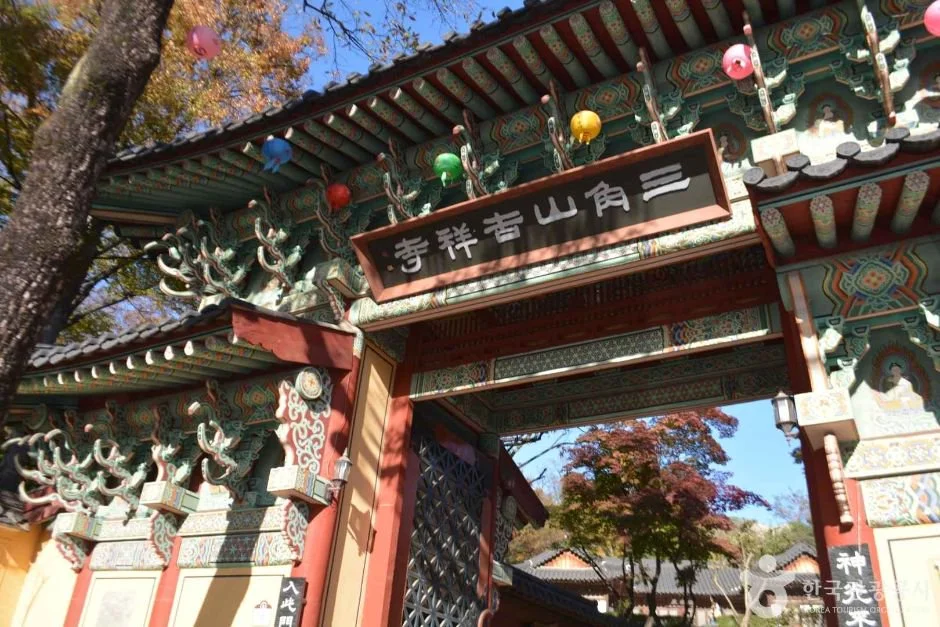
First-visit essentials: This is an active Buddhist temple on a wooded slope. Plan a daytime visit, expect steps, and keep voices low around worship spaces. The autumn photographs here are reference images, not a report of today's leaf color.
A restaurant's second life
Kim Yeong-han, owner of Daewongak, offered the property to Beopjeong after being moved by his writing on non-possession. The site formally became Gilsangsa in 1997. Knowing that history changes what you look for: some of the buildings were adapted from their earlier use, rather than designed as a single grand temple complex.
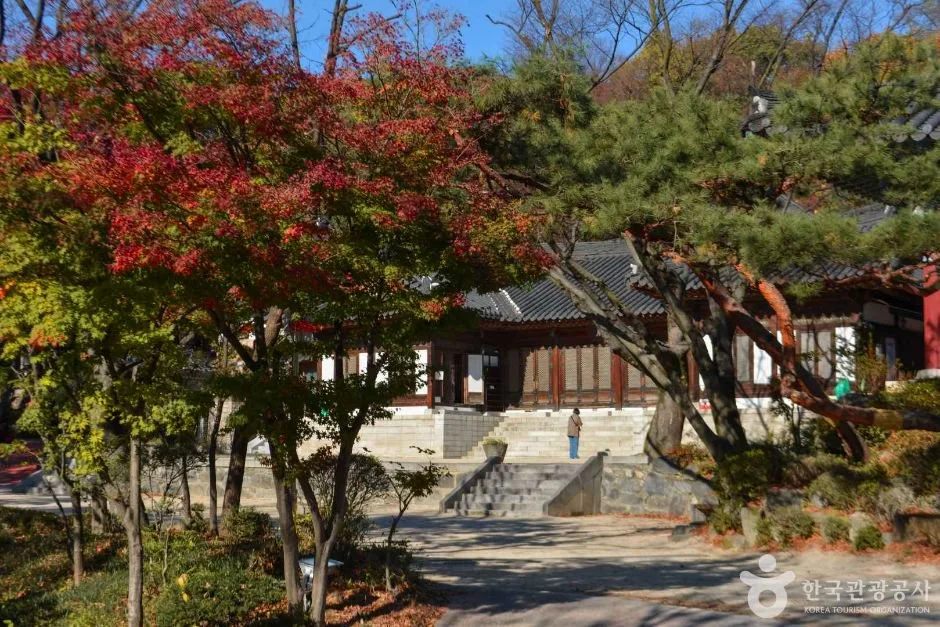
Start at the entrance gate, then look for Geungnakjeon, the main hall. Its restrained wooden exterior differs from the bright painted decoration often associated with Korean temples. The contrast with the colorful gate is part of the pleasure of looking closely. Follow visitor signs rather than treating every small building on the slope as open to the public.
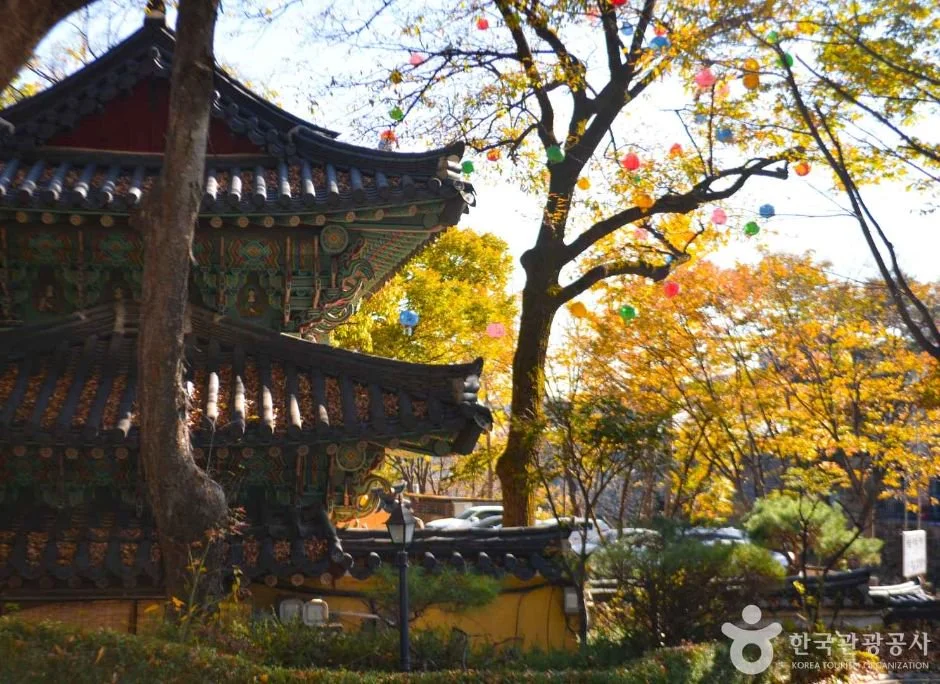
Look beyond the leaves
Two details give the grounds a story beyond seasonal scenery. The Avalokiteshvara statue was made by Catholic sculptor Choi Jong-tae, reflecting the temple's connections across religious traditions. Jinyeonggak, the memorial hall devoted to Beopjeong, preserves his portrait and personal belongings. If the hall is open during your visit, put the camera away inside: interior photography is prohibited.
The stream and trees provide a setting for a slower walk, but the temple remains a place of practice. Leave monks' residential areas undisturbed, avoid blocking stairs for photographs, and follow any instructions posted at individual halls. A temple program or overnight stay requires a separate check of availability; arriving for sightseeing does not guarantee participation.
Hours, access and getting back
Address: 68 Seonjam-ro 5-gil, Seongbuk-gu, Seoul. Save the Korean address for navigation: 서울 성북구 선잠로5길 68.
Opening information: Korea Tourism Organization's listing gives 09:00–18:00 and no regular closing day. Seongbuk-gu's English guide lists different, longer seasonal hours. These sources do not establish one consistent current gate schedule. Aim for daytime and confirm with the temple at +82-2-3672-5945 before a special trip or an early or late arrival. Individual halls can have separate access rules.
Public transport: Use Hansung University Station on Subway Line 4 as your connection point and check the Seongbuk 02 village bus for Gilsangsa. Seoul city's October 2026 Seongbuk-dong walking guide describes taking this bus from the stop directly in front of the temple back to the station. Check the stop display and direction before boarding; no fixed frequency or journey time is promised here.
Mobility: The photographed approach includes stairs, and the grounds rise uphill. If step-free access is essential, ask the temple about a suitable route before setting out rather than assuming the whole visit is accessible.
For the donation story, the Gilsanghwa memorial, additional photographs and more detail on the temple buildings, read FAMTIMES' full English guide to Gilsangsa, by Park Moon-sun, published October 18, 2026.
Visitor information checked October 19, 2026. Historical and photography guidance was also cross-checked against Seoul city's Gilsangsa photo feature. The temple website did not respond during this check.


Comments
Post a Comment