Gwangju History & Folk Museum: A Free Indoor Route from Village Life to City Streets
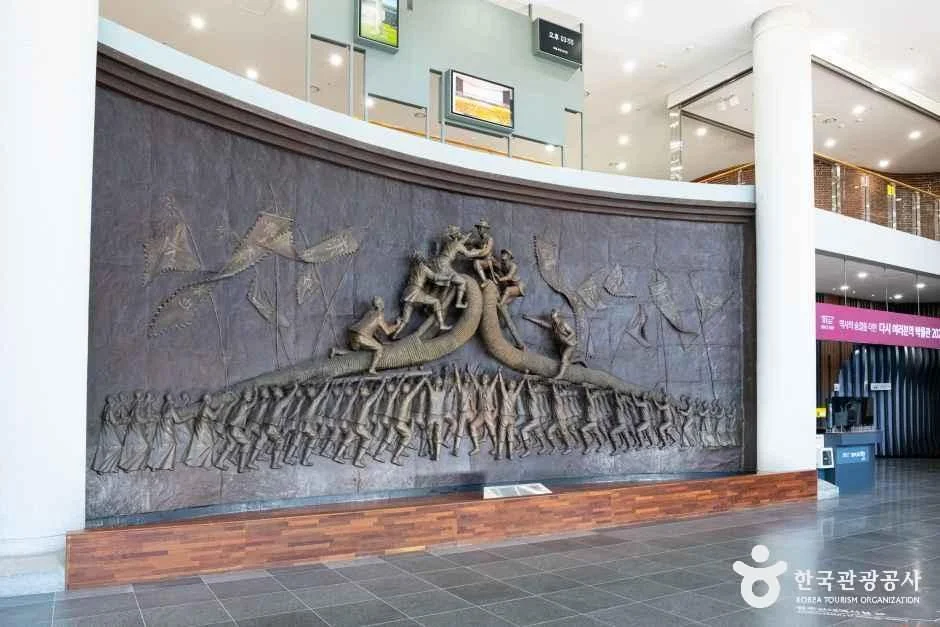
A reconstructed city street, a wall-sized village contest and everyday tools tell different parts of Gwangju's story. At the Gwangju History & Folk Museum in Jungoe Park, you can connect rural life in southwestern Korea with the city you are visiting today. This is a useful indoor stop for travelers who want context between meals, markets and outdoor walks.
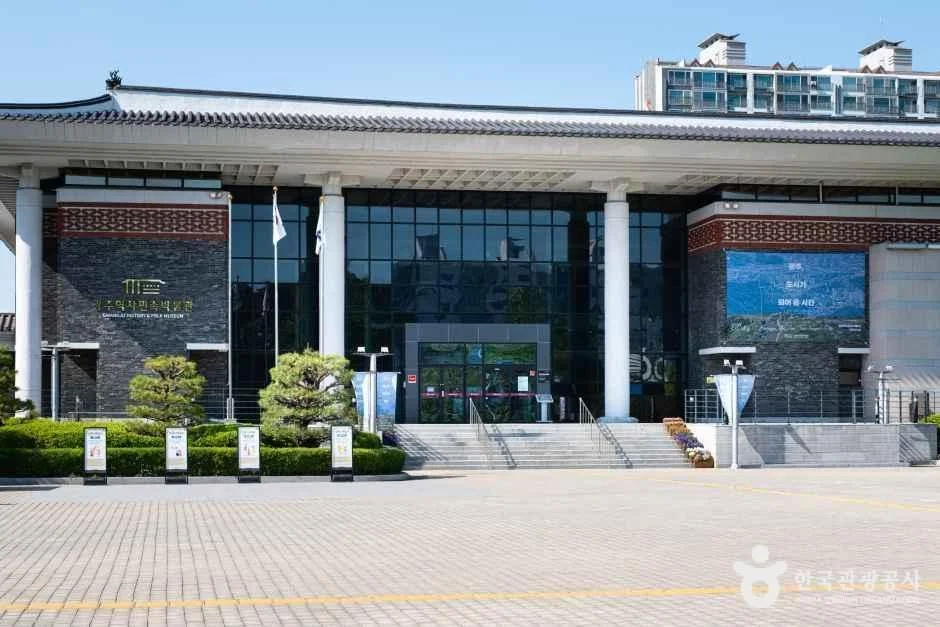
A simple route through the museum
Begin with the lobby, continue through the first-floor Namdo Folk Hall, then go upstairs for Gwangju's urban history. Finish with the outdoor stone displays if the weather suits. Treat this as a suggested sequence, with time to stop at the exhibits that interest you, rather than a timed tour.
The first floor makes a good starting point because its subjects are familiar: growing food, building a home, fishing and trading. Look for the relationship between work and community. Traditional housing displays also offer a useful introduction to ondol, heated floors, and maru, wooden floor spaces—features you may encounter in a hanok stay.
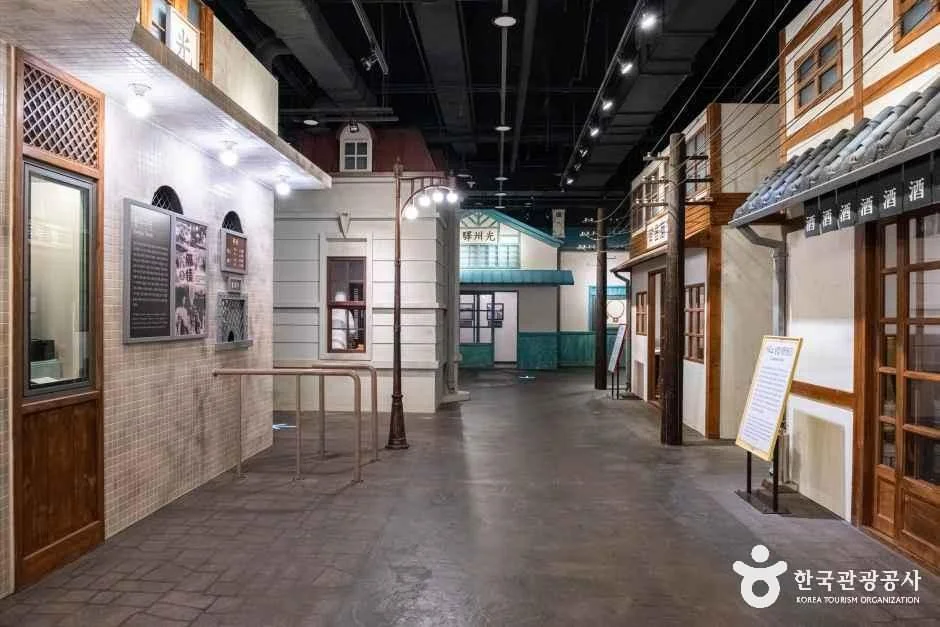
Look closely at the recreated street
Upstairs, the focus moves from regional livelihoods to the city. The Chungjang-ro reconstruction evokes the streets of the 1920s and 1930s. Its shopfronts and public buildings provide a visual way into the story; these are museum reconstructions, not a preserved outdoor neighborhood.
The wider gallery follows Gwangju through its former fortress town, colonial-era change and modern history, including democracy movements. If you plan to explore central Gwangju afterward, use the displays to collect place names you want to understand better. For children, comparing the street's signs and buildings with today's streets can give the visit a clear focus.
Check before setting out
Admission is free. The museum's current visitor page lists 09:00–18:00, with last entry at 17:30. It also lists extended Wednesday opening until 20:00, last entry 19:30, from April 1, 2026. VISITKOREA lists closures on Mondays, January 1 and the day following a public holiday.
The museum's visitor page also carries an advance-reservation notice. Check current entry arrangements and holiday exceptions before traveling: +82-62-613-5378. Do not assume free admission means a reservation is unnecessary. See the museum visitor information and VISITKOREA listing.
Getting there
Save the destination as 광주역사민속박물관, 48-25 Seoha-ro, Buk-gu, Gwangju. The museum's official directions list buses Songjeong 29 (송정29), Munheung 53 (문흥53) and Sangmu 63 (상무63) for the Yongbong-dong Ssangyong Apartments / History & Folk Museum stop. Check the direction and live service before boarding; the published guide does not specify the final walking distance.
For a taxi, the official guide estimates about 15 minutes from U-Square or Gwangju Station, and 40 minutes from Songjeong Station. These are estimates, so leave room for traffic. Consult the official directions when planning your connection.
Want to choose which displays deserve more time? Read FAMTIMES' illustrated museum guide for additional gallery photographs, the story behind Gossaum Nori and the outdoor stone collection.
Adapted from Park Moon-sun's FAMTIMES report, published October 14, 2026. Visitor details checked against official sources on October 17, 2026. Photographs retain their original credits and watermarks.


Comments
Post a Comment