Paju Folk Museum: Walk Inside the Storage Rooms, from Jars to Tiny Tables
At the National Folk Museum of Korea in Paju, the shelves are the attraction. Jars climb a wall of glass compartments, small dining tables repeat across tall racks, and wooden chests fill another bay. If you enjoy discovering how ordinary things were made and used, this is a museum where looking at several similar objects can be more interesting than searching for a single masterpiece.
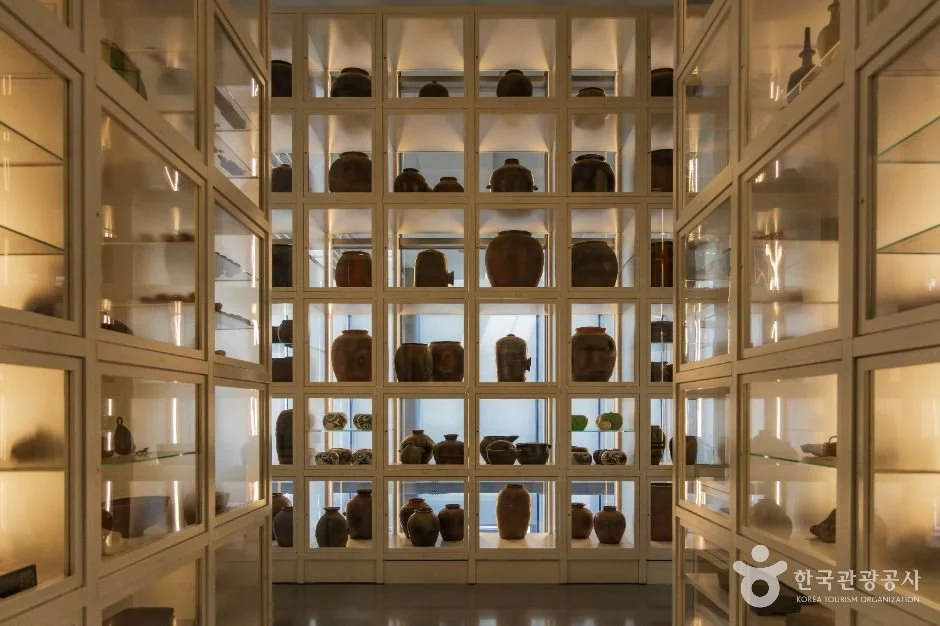
Visit the collection behind the exhibition
Most museums show a selection and keep the rest out of sight. Paju makes storage part of the visit. Some rooms let you walk inside; others let you look through windows. Closed storage remains part of a working collection facility, so this is a view into museum care rather than access to every shelf.
The branch opened in 2021 beside Heyri Art Village. Its collection includes physical folk objects as well as photographs, recordings and other archival material. That mix matters: a jar or a small table is not just a shape to admire, but a starting point for thinking about cooking, eating and living.
A useful way to begin is to choose one shelf and compare silhouettes. Look for the widest shoulders, the narrowest neck or the smallest cup. Then use the collection-search facilities described in the FAMTIMES report to investigate an object that catches your attention. There is no need to turn the visit into an attempt to count the entire collection.
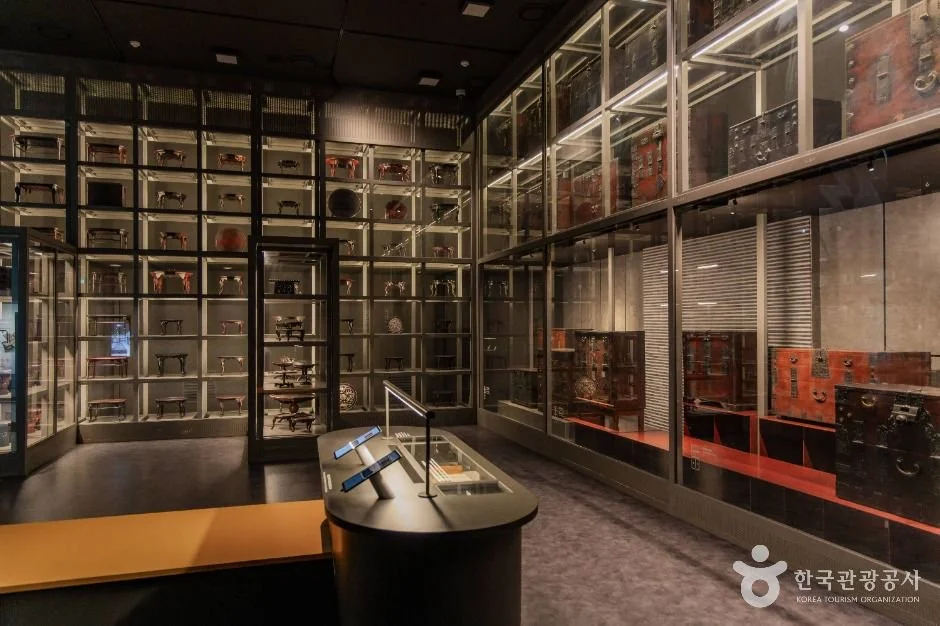
Give everyday furniture a closer look
The wooden collection changes the mood. Against a darker interior, rows of small tables and chests make their different proportions easier to notice. The report identifies soban, the small dining tables, and bandaji, front-opening chests, among the objects stored here.
For a visit with children, try a simple looking game: each person chooses one object and explains what they think it was used for before checking the information. The museum’s published suggestions similarly encourage sharing memories and imagining an exhibition around a favorite object. This works in the general museum without treating the separate Children’s Museum as an automatic part of your ticket.
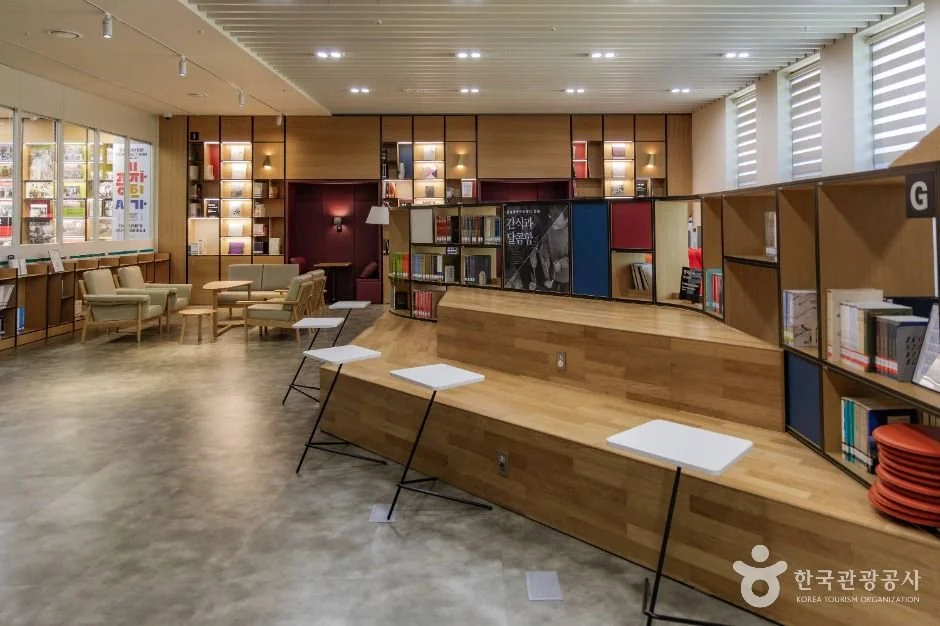
Leave time for the archive
The archive and reading spaces extend the visit beyond objects. Photographs, books and recorded material give another way into everyday Korean life. The bright, tiered lounge in the photograph also shows the contrast with the dark furniture storage: the building has places to sit and look, as well as places to browse.
Consider combining the museum with nearby Heyri rather than crossing Paju for a rushed stop. Allow your own pace for the shelves and check transport home before heading into the surrounding area.
Plan your visit
Hours and cost: Tuesday–Sunday, 10:00–18:00; last entry 17:30. Admission is free and general visits need no advance booking. Closed Mondays, January 1, and Seollal and Chuseok days. A public-holiday Monday opens, with closure on the first weekday afterward.
Getting there: The museum lists buses 2200 and 2200-1 from Hongik University Station Exit 1, and 7300 on weekends. From GTX-A Unjeong Jungang Station it lists bus 037. Check live departures and the final stop-to-entrance walk; no journey time is promised here.
Destination: 30 Heyri-ro, Tanhyeon-myeon, Paju (국립민속박물관 파주). The Children’s Museum requires a separate reservation. Museum parking operates 10:00–18:00, Tuesday–Sunday; vehicles cannot enter or leave outside those hours. Flash and tripods are prohibited.
Visitor details checked 28 October 2026 against the museum’s official Paju visitor guide. Check it for holiday changes and current Children’s Museum arrangements.
See what else is stored here
For photographs of the cups, glass-fronted corridors and media wall, plus the story of how storage became exhibition space, read FAMTIMES’ full guide to the National Folk Museum in Paju.
Prepared by FAMTIMES Korea Travel from Kim In-seo’s report of 26 October 2026 and the official visitor guide above. This is a researched guide, not a personal visit account.


Comments
Post a Comment