Penguin Village, Gwangju: Old Clocks, Craft Studios and When to Visit
Wall clocks, old radios and cooking pots turn a small Gwangju lane into something worth slowing down for. Penguin Village in Yangnim-dong is a good stop for travelers who enjoy looking closely at everyday objects—and would rather browse a working craft studio than rush through another photo backdrop.
Start with the walls, then find the workshops
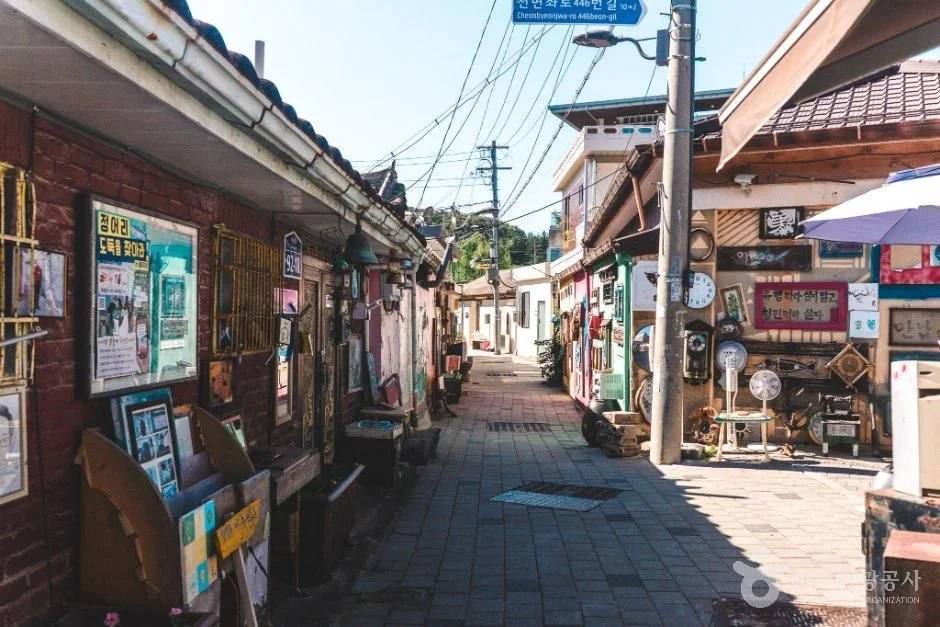
Look at the first photograph: clocks and small displays sit beside doors and windows, rather than behind museum glass. The objects give you a simple way to explore. Pick one familiar item, then notice how its new setting changes the way you see it. A pot that once belonged in a kitchen becomes part of a wall display; an old clock becomes a detail to search for in the next doorway.
According to Gwangju’s tourism guide, residents began decorating the neighborhood with discarded objects after clearing a fire-damaged abandoned house. The penguin name has a local human story: the guide connects it to elderly residents whose walking reminded neighbors of penguins. This is a neighborhood shaped by its residents, so keep doorways clear and ask before photographing people or entering private spaces.
Make the craft street the purpose of the visit
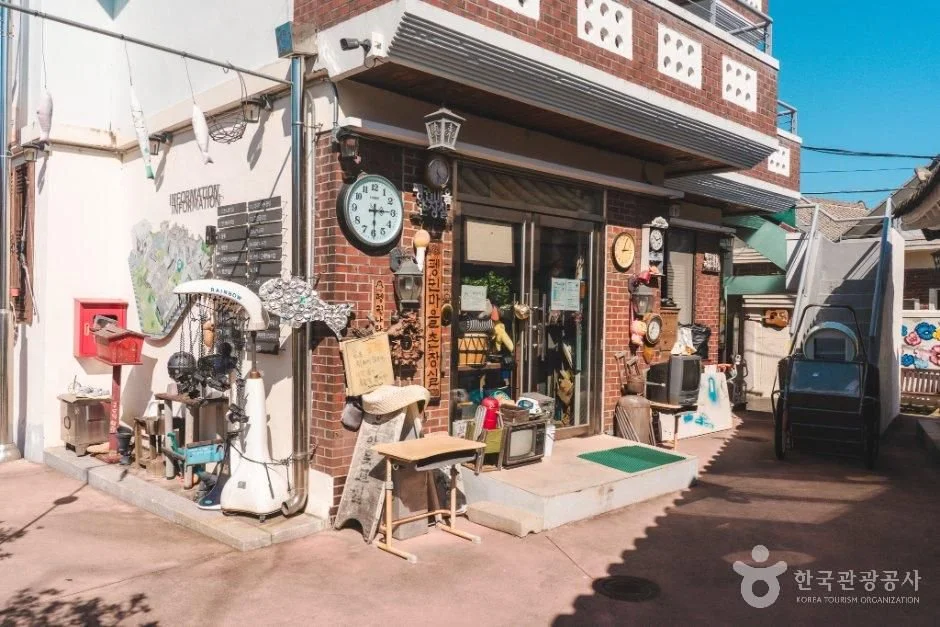
The lane works as an outdoor walk, but the craft street offers a reason to visit during business hours. Leather, textile and woodworking studios are among the businesses described by the city. Rather than expecting every door to provide the same experience, choose a material you are interested in and ask that studio about its work.
The city also lists upcycling activities, including making pouches from discarded banners. A class needs more planning than a stroll: contact the studio directly for its current program, price, language arrangements and availability. No class or event is guaranteed simply because you arrive during the listed opening hours.
Plan your arrival
When: Gwangju’s official craft-street listing gives Tuesday–Sunday, 10:00–18:00, with Monday closed. Its separate Penguin Village listing describes the outdoor lane as always open with no closing day. For a first visit, aim for daytime studio hours; an open lane does not mean open workshops.
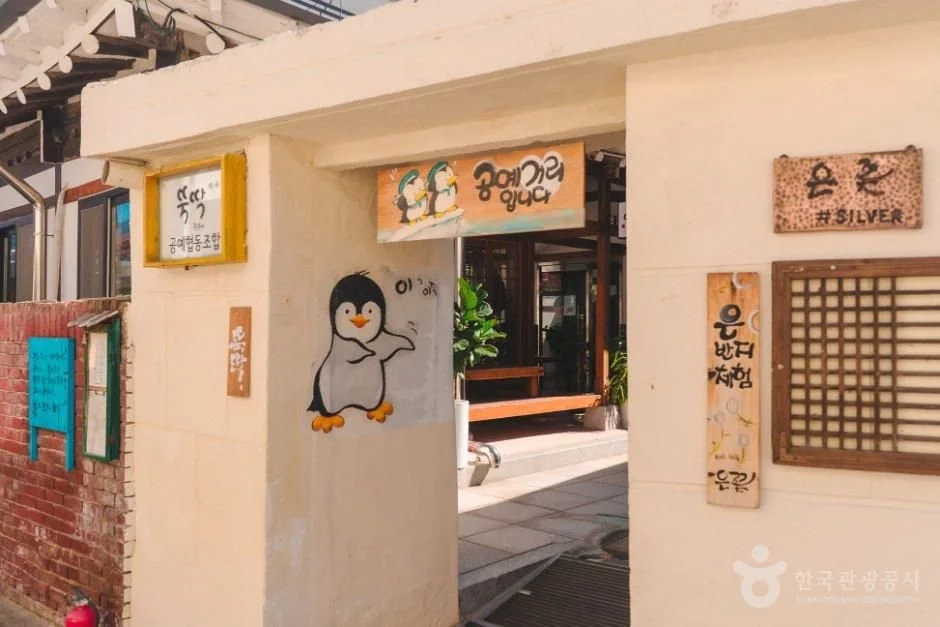
Where: The city lists the craft street at 20-13 Ogiwon-gil, Nam-gu, Gwangju (오기원길 20-13). Follow the penguin-shaped signs behind the Yangnim-dong community service center. Save the Korean destination name, 양림동 펭귄마을공예거리, for map searches.
Bus: The official listing names Geumnam 55 (금남55) at Yangnim-gyo (양림교), Hakgang-gyo (학강교) and Hakgang Elementary School (학강초교). Check a live route planner for your departure point, service times and the final walk; an exact walking time from these stops has not been verified.
Before driving or booking: The village listing says there is no parking facility, so do not count on parking at the entrance. For current access and workshop information, the city gives +82-62-674-5707 / 5708 (Korean).
Visitor details checked 27 October 2026 against Gwangju Tourism’s craft-street guide and Penguin Village guide. Individual studio schedules can vary.
Keep exploring Yangnim-dong
For more photographs—including the penguin mailbox and a hanok porch—and background on the nearby heritage buildings, read FAMTIMES’ full Penguin Village and craft-street guide. It helps turn the lane into a starting point for a wider Yangnim-dong visit.
Prepared by FAMTIMES Korea Travel from Kim In-seo’s FAMTIMES report of 25 October 2026 and the official visitor sources above. This is a researched guide, not a personal visit account.


Comments
Post a Comment